

China has long insisted that it does not provide arms to any side in a war. Beijing characterizes this as “non-interference” in other foreign policy matters. But in recent years, Beijing has repeatedly faced accusations of doing the opposite: providing direct military assistance to nations in conflict, while openly denying it and even adopting a position of diplomatic neutrality. This seems to have been the case with two of China’s closest allies. Beijing has supported Islamabad in the Pakistan-India conflict and the Kremlin in the Russia-Ukraine conflict.
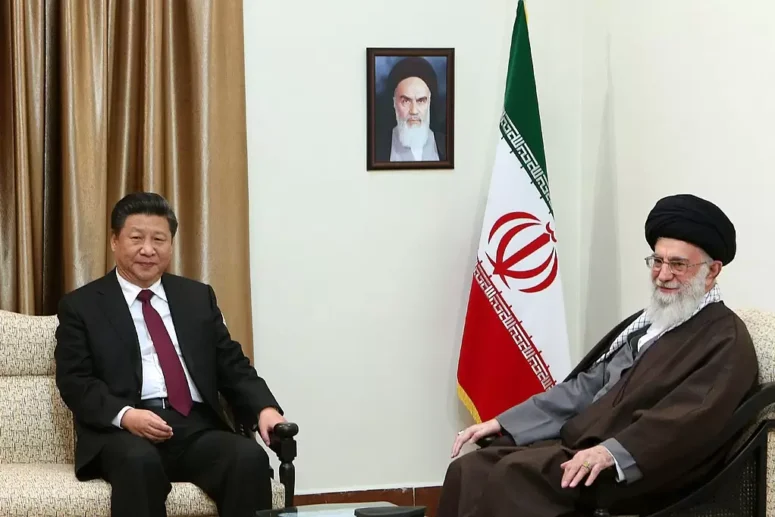
Beijing is currently facing scrutiny over alleged military ties with Iran. Beijing has criticized Israel's air strikes on Iran. Following a ceasefire in the Middle East following a 12-day war, China has reportedly supplied Iran with batteries for surface-to-air missiles in exchange for oil. Tehran needs the batteries from China to protect itself from a possible Israeli air strike. The Chinese embassy in Israel has denied the reports, saying China is firmly opposed to the proliferation of weapons of mass destruction and does not export weapons to warring countries. However, the Chinese Foreign Ministry has not yet made an official statement on the alleged transfer.
Western experts consider it possible that China could offer military support to Iran. They also view Beijing’s denial of military support to Iran as normal. Such plausible deniability would allow Beijing to exert military influence and demonstrate some of its technical capabilities, while avoiding international criticism and maintaining diplomatic flexibility. But as circumstantial evidence accumulates, many argue, such covert activity could gradually become an open secret, leading to what scholars call “implausible denialism,” in which denial, even if it is still maintained officially, is no longer credible.
Beijing has consistently maintained its neutrality in the Russia-Ukraine war that began in 2022, but has quietly supported Russia. In part because China shares the same strategic goal of challenging the Western-led international order. Recently, Chinese Foreign Minister Wang Yi told the European Union’s foreign policy chief, Kaja Kallas, that Beijing cannot wait for Russia to lose the war in Ukraine. He is reported to have warned that a Russian defeat would bring all the strategic pressure from the United States to bear on China. From Beijing’s perspective, Moscow is playing a crucial role in keeping the West busy, diverting American attention and resources from the Asia-Pacific region, offering China valuable strategic breathing room. In addition to deepening trade ties that have become a lifeline for Moscow’s economy under Western sanctions, China is also reported to be supplying Russia with large quantities of dual-use goods—goods that can be used for both civilian and military purposes—to enhance Moscow’s offensive and defensive capabilities, as well as to boost China’s military-industrial production. Beijing is also alleged to have provided satellite imagery to Russia to aid it on the battlefield. Although the US and Europe have repeatedly tried to call on China to provide military assistance to Russia, Beijing has consistently denied such allegations.
Ukraine officially accused China of directly supporting Russia on April 18, 2025, and imposed sanctions on three Chinese-based firms that Kiev said were involved in producing weapons for Russia's war effort. China's Foreign Ministry has traditionally rejected Ukraine's accusation, confirming that China has never supplied lethal weapons to any of the parties to the conflict, and reiterating its official position on promoting a ceasefire and peace talks.
 EN
 AZ
 RU
 TR